Cold Chain & Reconstitution: Why Storage Is Half the Experiment
A 99% pure peptide stored badly is no longer 99% pure. The full guide to handling lyophilized research peptides.
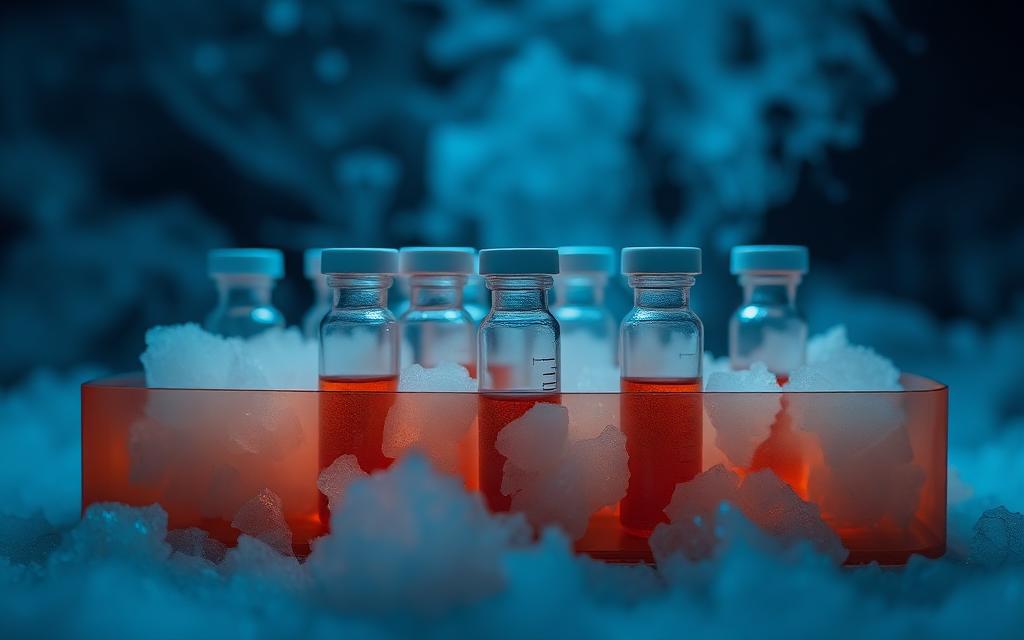
Peptides degrade through three main pathways: oxidation (especially cysteine and methionine residues), deamidation (asparagine, glutamine), and hydrolysis at exposed bonds. All three accelerate with temperature, light, and humidity. Storage is therefore not a logistics problem. it's a chemistry problem.
Lyophilized peptides are stable at −20°C for years in most cases. Above 4°C, half-lives can drop to weeks. After reconstitution in bacteriostatic water, most peptides are stable refrigerated for 4 to 8 weeks; some (BPC-157, GHK-Cu) are robust for longer, others (oxytocin, melanocortins) far less.
Cold-chain shipping matters because a vial that hits 25°C in transit for 48 hours has measurably different in-vitro behavior than one that stays sub-zero. Orvion ships every order in insulated boxes with phase-change gel packs validated to maintain ≤8°C for 72 hours.
Practical bench tips: aliquot immediately after reconstitution to avoid freeze-thaw cycles, label aliquots with date and concentration, and run a fresh standard curve when comparing data across batches. The molecule in the vial is only one variable. how you handle it is another.
Ready to run your study?
99%+ HPLC/MS verified · batch tested · cold-chain shipped.
Shop research peptides